
ショートリスト
RE:CYCLE
-A Spiral Path Reconnecting Belgrade’s History and Future-
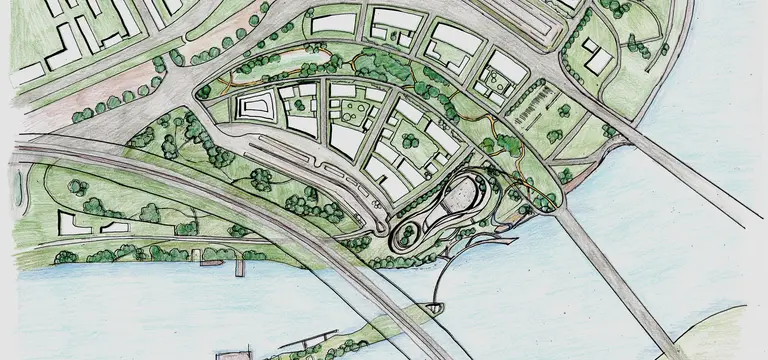
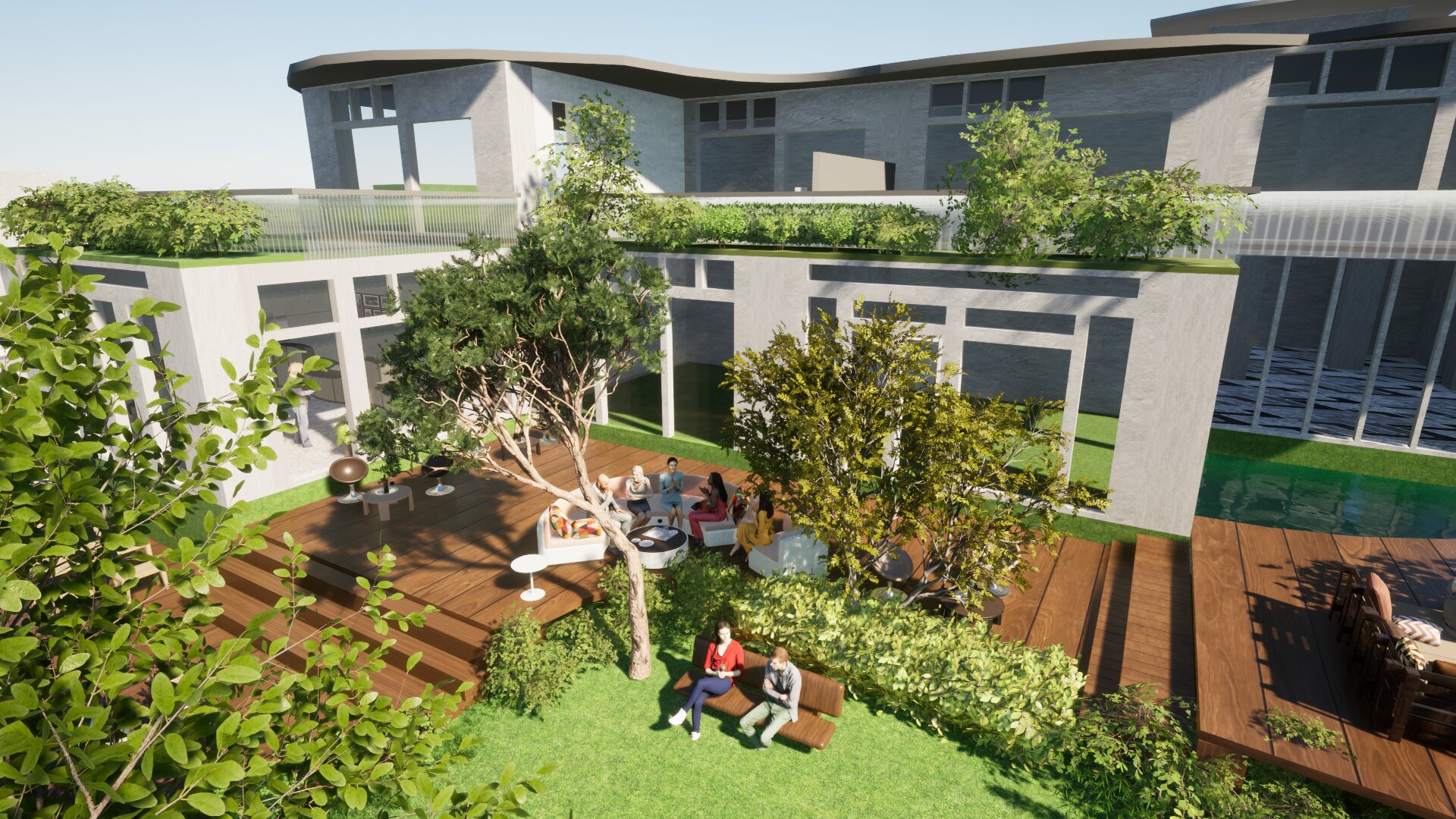
RE:CYCLE redefines Belgrade’s industrial "Mass" as a dynamic "Flow," reconnecting history with a green future. Elevated conveyors evolve into a continuous running loop that synchronizes human movement with natural air cycles. Aligned with the master plan, the building’s spiral structure integrates dense greenery to bridge the urban divide between old and new layers. This motif transforms a static industrial site into a vibrant, sustainable pulse, honoring the city's heritage through active motion.
武庫川女子大学・建築学部造園学科 月山 杏菜
武庫川女子大学・建築学部造園学科 宮本 知佳
武庫川女子大学・建築学部造園学科 内匠 あかね
指導教員:武庫川女子大学・建築学部造園学科
教授 杉田 茂樹
講評(若林審査員長)
対象敷地に限らず、複合施設、商業施設ゾーンまでの街を描き、街の大通りの「受け」となる森を対象敷地の北西角に設けた提案に魅力を感じた。
一方で施設規模が大きく、建物外周に余白がなくなり、せっかく描いた隣接する街の緑とのつながりが感じられなかったこと、屋上のランニングループと各階の結び付きが弱かったこと、さらには路地から中庭へと風を抜く設えが伝わらなかったことが残念だった。また、ヨットクラブでは構造を除いて全撤去、再構築するよりも既存の良さを活かす改修提案が欲しかった。
とは言え、手描きの鳥瞰パースやスケッチには大いに好感が持てた。手描きは設計者の想いを伝える大切なスキルであり、この力を伸ばして成長されることを楽しみにしている。
Recovery+1
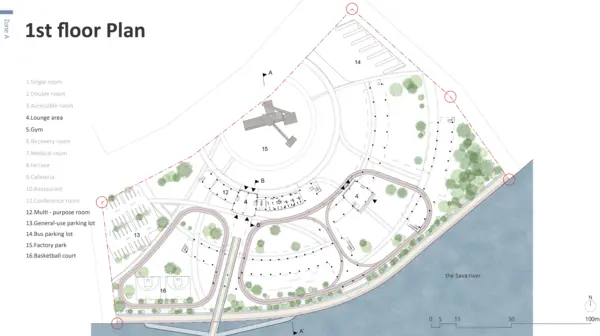
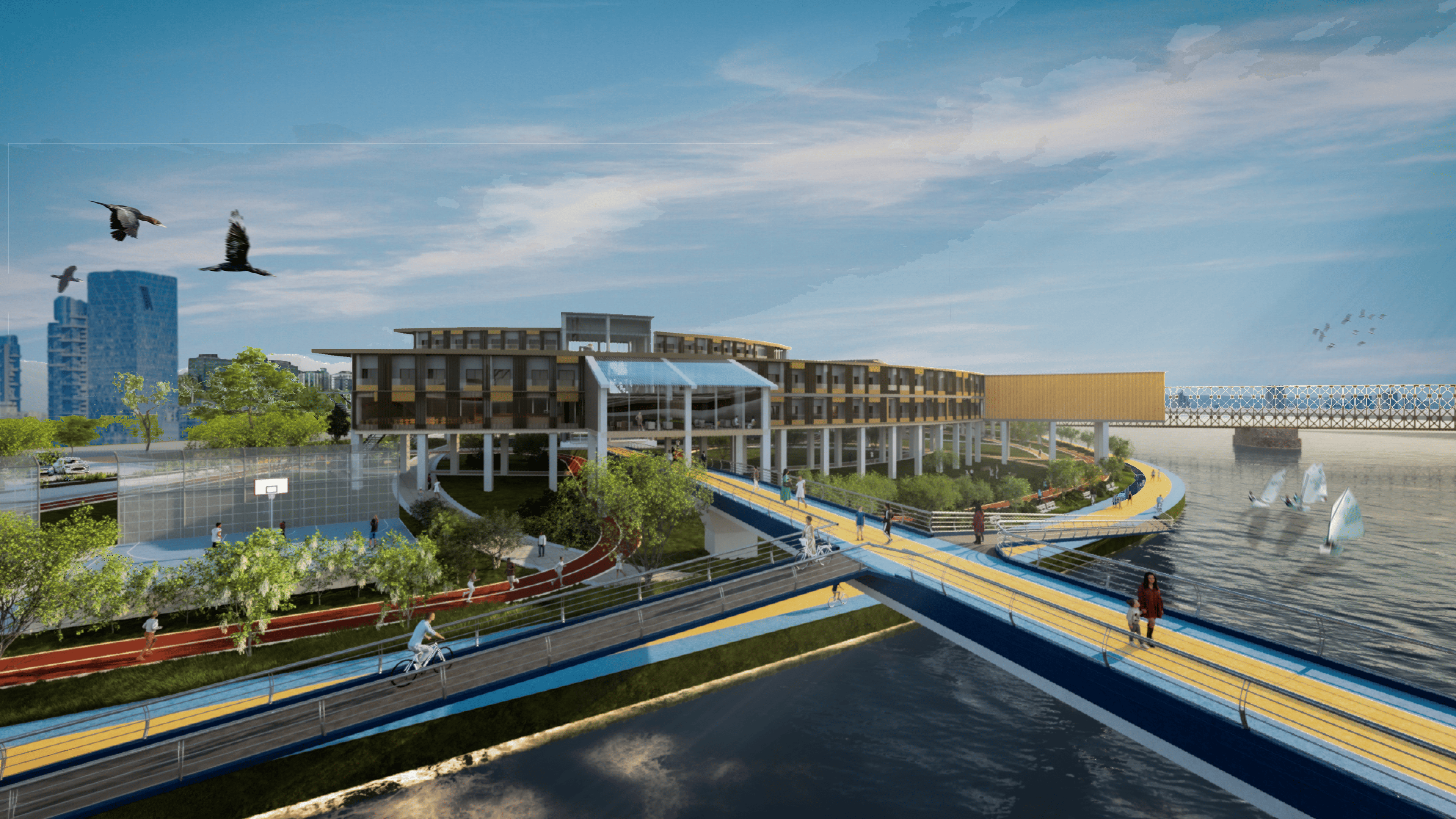
We propose “Recovery +1” as a concept that goes beyond recovery by adding value.
As the site becomes a hub for sports and recreation, a reciprocal relationship of “supporting and being supported” emerges between citizens and athletes. People gain energy beyond recovery that supports daily activity.
Once an abandoned industrial area, the site is revitalized through human activity, regaining vibrancy and forming a dynamic landscape. By reconnecting life with the river, new urban value is created.
芝浦工業大学・システム理工学部 羽鳥 広航
芝浦工業大学・システム理工学部 山中 泰士
芝浦工業大学・システム理工学部 砂田 佳子
指導教員:芝浦工業大学
教授 水谷 晃啓
講評(掛上審査員)
セメントプラントを地域の記憶として残し、環境保全活動の契機を象徴するデザインとしたのは独創的であった。一見新築建物が外部の人にとって閉鎖的な空間に見えるが、ピロティによりフィールドを開放し、水害に配慮しつつ回遊性を生み出し、アスリート・研究者・市民という異なる主体が互いの活動を気配として感じ取れる距離感をデザインされた。改修部分ではヨットを考慮した新築建物との接続や自転車を踏まえた上下階のつながりが十分検討されていた。一方で建物規模が大きい(5階建)ことに対する説得力ある説明の不足、エネルギー計算・環境性能関連情報の不足は減点要素。プラントを残すことによる解体時のCO2の排出量の削減や構造・意匠による環境面の優位性を示せると尚良かった。
Sports Commons
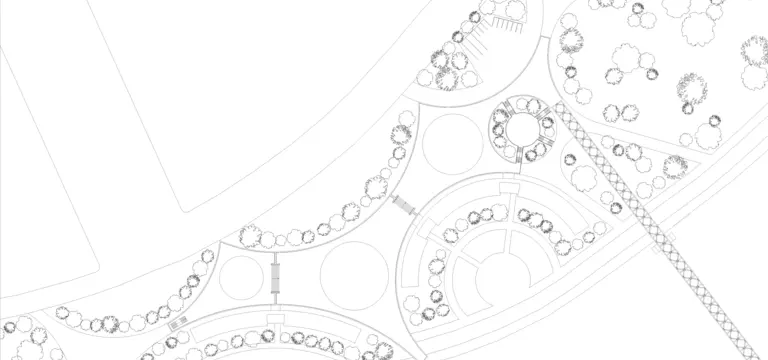
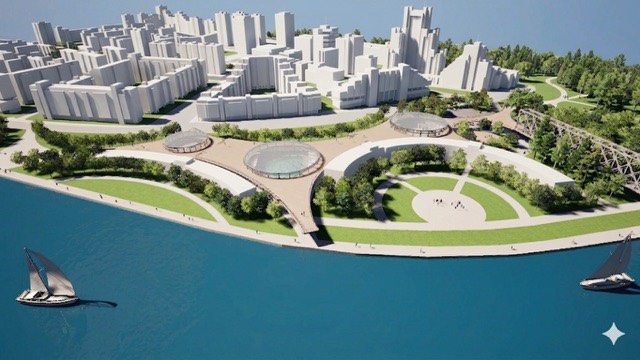
Situated at the intersection of diverse thresholds-between old and new city , land and water, and fragmented green spaces -this "Sports Commons" is designed as a sanctuary where local residents and sports, and people and nature, can naturally intertwine and cultivate new relationships.
The artificial ground, derived from the context of its surroundings, functions as a bridge linking the disconnected greenery while simultaneously serving as a boundary that delineates "stillness" and "motion." This structure acts as a vital hub, bridging the gap between the restless urban energy and the private serenity of the lodging facilities. By embedding dynamic sports programs within this elevated plane, the architecture integrates these contrasting realms into a unified experience.
For the yacht club renovation, the goal was to create a cafe where one can encounter sports and nature even without active participation. Furthermore, by proactively greening the facades and rooftops on both sides of the river, the design expresses a unified commitment to preserving and extending the green belt. This project is not merely a facility, but a living node that weaves together the layers of the city and the natural environment.
早稲田大学・創造理工学研究科建築学専攻 那須 由基
早稲田大学・創造理工学研究科建築学専攻 橋本 果歩
早稲田大学・創造理工学研究科建築学専攻 Soe Sandi Win
指導教員:早稲田大学
教授 萩原 剛
講評(三井審査員)
本提案は、敷地単体の計画に留まらず、都市的なスケールで円弧状に広場や建築を配置することで、周辺環境との関係性を生み出そうとしていた点が印象的であった。
特に、水辺・緑地・都市を連続した空間として捉え、建築をランドスケープの延長として扱おうとする姿勢には、この場所に対する明快な応答が感じられた。
一方で、全体を規定している円形の幾何学が非常に強いため、それが制約となって空間全体が引っ張られ、やや硬さや単調さを感じる場所が少なからずあったのが惜しまれる。
幾何学的な秩序はこの提案の重要な骨格になっているが、その上で、断面的な操作や開口、光や風の取り込み方などをより繊細に調整することで、さらに人間的で豊かな空間体験へ発展していく可能性を感じた。今後の展開にも期待したい。
Water Cycle Hub - Integrating Sports,Energy,and Ecology
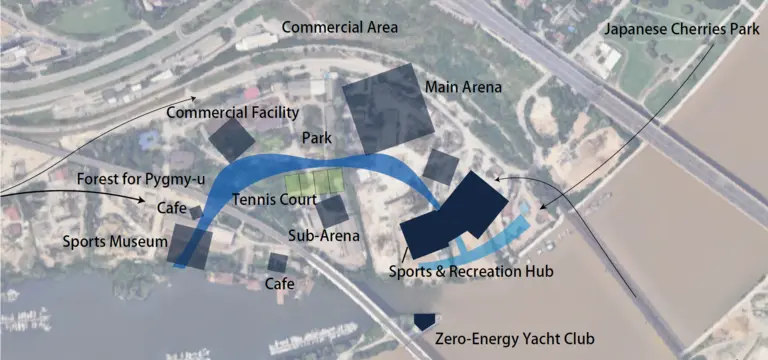
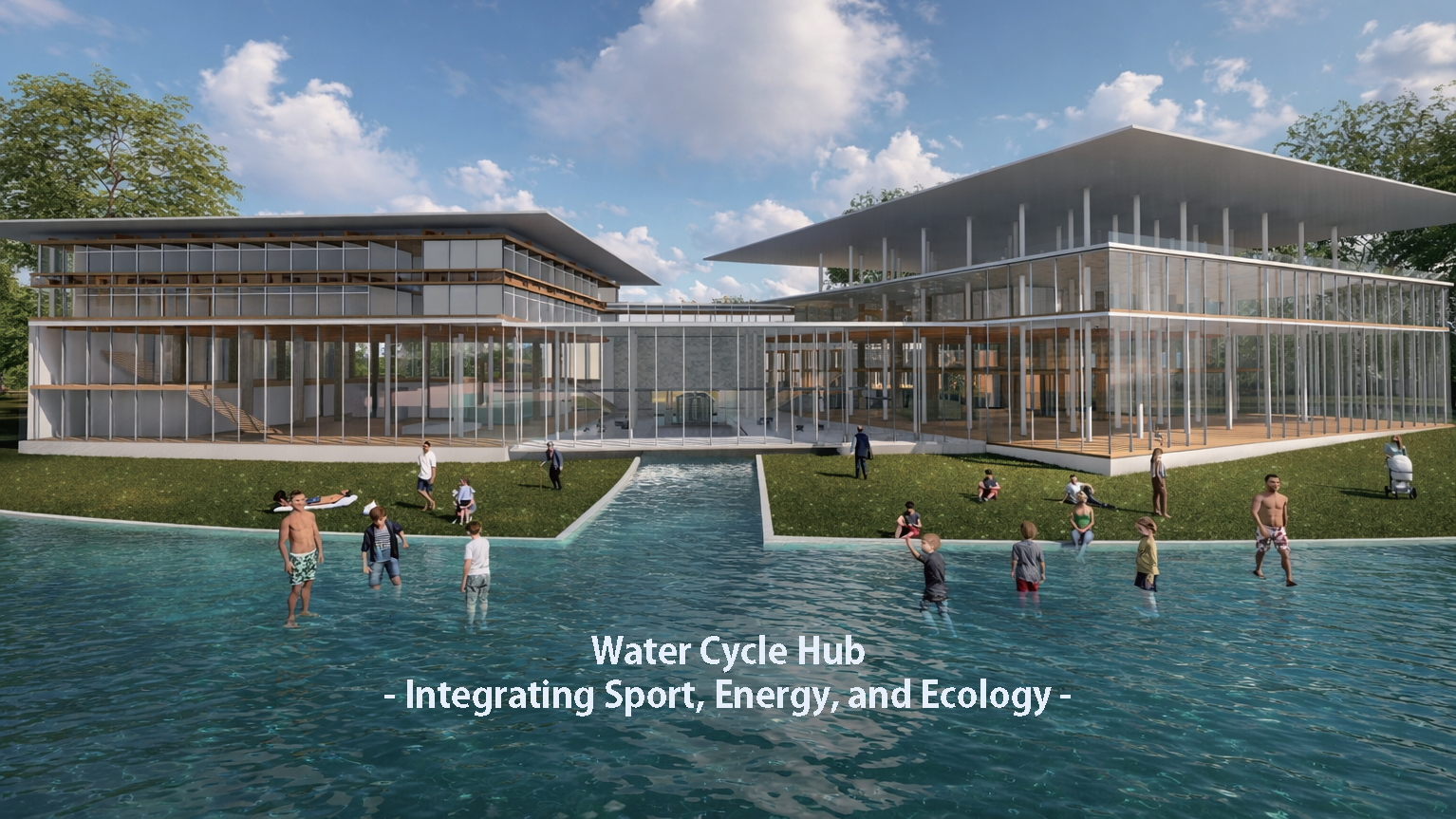
"Water Cycle Hub" centers on a 460m purification canal, creating a regenerative athletic ecosystem. Sava River heat pumps provide 100 athletes with radiant climate control and precise humidity management. The design features a Pygmy Cormorant green buffer and a public plaza for natural water interaction. Surfacing the water cycle allows users to experience the river's blessing. The ZERO Energy Yachting Club uses passive facades and solar power to become a sustainable community node.
早稲田大学・大学院創造理工学研究科建築学専攻 吉森 優菜
早稲田大学・大学院創造理工学研究科建築学専攻 木榑 実季
指導教員:早稲田大学
教授 田辺 新一
講評(南審査員)
建築において環境負荷低減や室内環境の向上を図る上で、設備計画は不可欠な要素である。本提案は、Sava Riverの水景・水流を敷地および建物の中心に取り込み、水循環を最大限に活用した設備・空調システムを主軸とする点に独創性がある。Renovationにおいては、太陽光発電の活用と外皮性能の向上によりNet Zero Energy Buildingの実現を志向しており、既存建物における環境的バリューアップとして秀逸である。設備システムを主軸とするのであれば、より大胆に計画敷地全体で河川資源を活用した地域エネルギー拠点や地域冷暖房システムへと化した提案とすることで、独創的だけでなく、社会的・経済的効果や意義が付加されたデザイン提案になり得たと考える。加えて、意匠的デザイン視点と設備計画との統合が図られると、提案の完成度は一層高まると期待する。
In-between in inclination
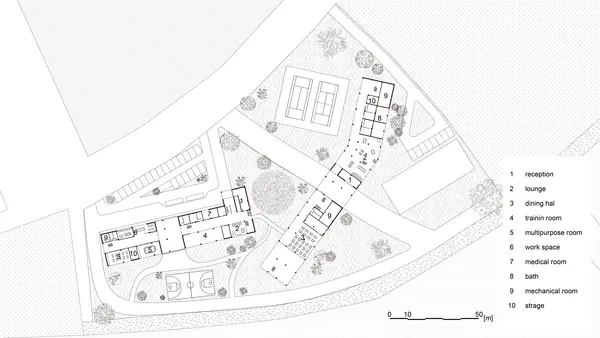
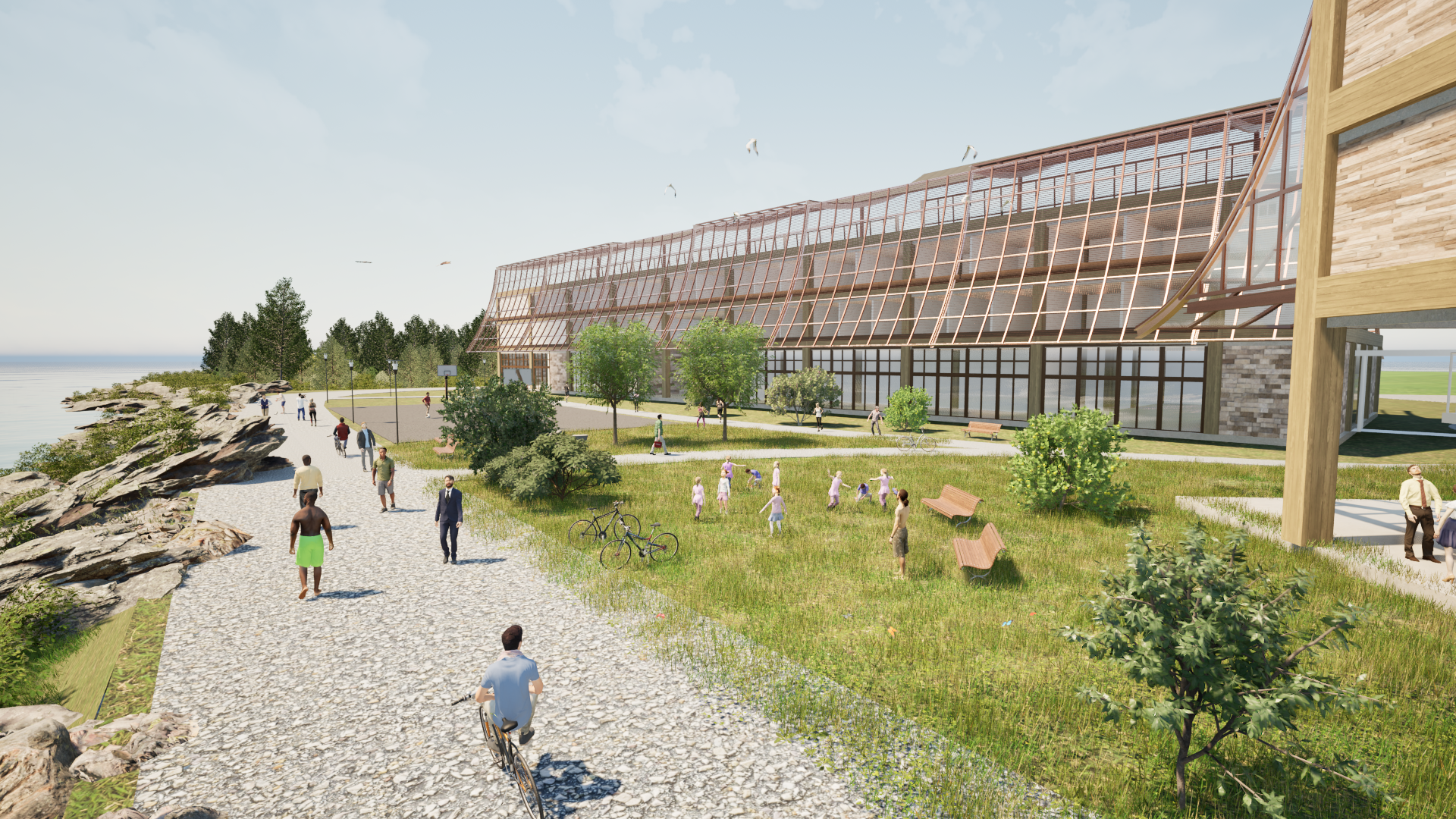
This project proposes an architectural buffer that mediates between urban activities, sports programs, and the riverside ecosystem at the Belgrade Waterfront. Rather than separating these elements, the design creates a continuous spatial system that gently connects city and nature. Through climate-responsive strategies such as ventilation, daylight control, and inclined green surfaces, the proposal enhances environmental performance while supporting diverse public and athletic uses.
東京都立大学・都市環境学部建築学科 金子 晴飛
東京都立大学・都市環境学部建築学科 大嶽 那於人
指導教員:都市環境学部建築学科
教授 小泉 雅生
講評(掛上審査員)
都市・スポーツ・河川環境という異なるレイヤーの間に「傾斜する中間空間」を挿入し、空間そのものを環境調整装置として意匠・環境の両面を成立させた点は良かった。建物の配置や断面に与えられた傾きは、動線・視線・風・光を自然に導き、内外の境界を曖昧にしながら連続的な空間体験を生み出している。改修部分と新築部分を横断する中間領域により、断絶していた要素につながりができ、使われ方に応じて多様な居場所が生まれるように感じられた。一方、改修部分と新築部分のつながりの不足、改修部分の施工詳細不足、中間領域を形成するためのエンボディドカーボン増大に対してオペレーショナルカーボンの削減が表現不足の点があり、改善できると尚良かった。
Upcycle Hub
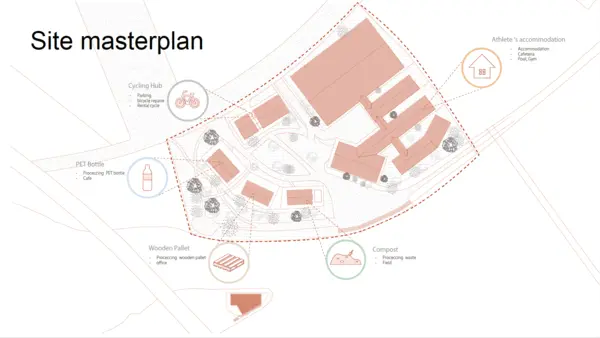
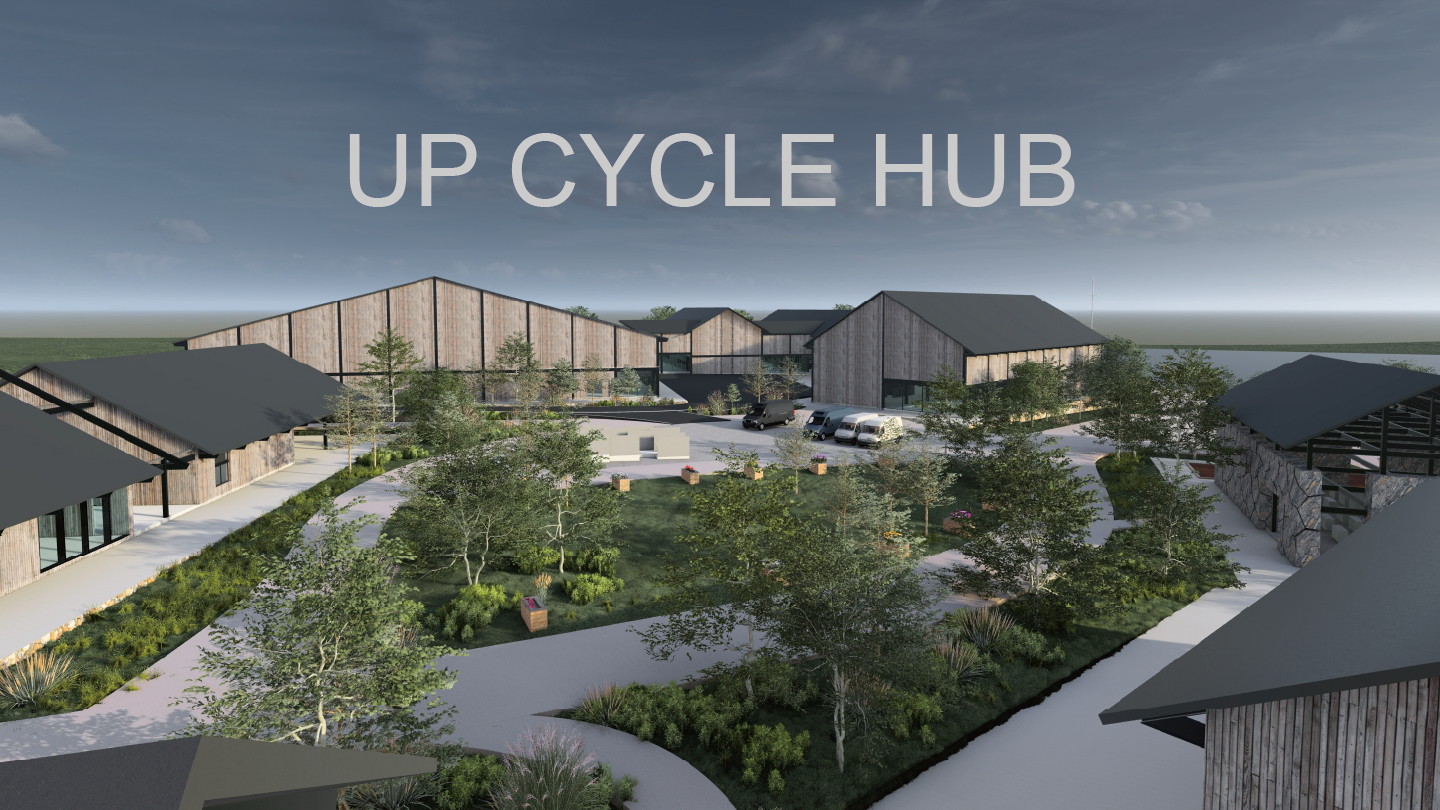
Concept: Discipline as a Catalyst
The brief demanded specialized housing for elite athletes. This design leverages the "special status" of athletes—figures of discipline and physical excellence—to solve local environmental issues. By integrating a public Upcycling Hub into the athletic program, the facility translates the discipline of "refining the body" into the civic duty of "refining the environment." The site is reimagined as a machine for both physical and ecological regeneration, where the rigor of sports inspires the community.
芝浦工業大学・システム理工学部環境システム学科 古澤 陽希
芝浦工業大学・システム理工学部環境システム学科 福島 太一
芝浦工業大学・システム理工学部環境システム学科 内間 康介
指導教員:芝浦工業大学・システム理工学部環境システム学科
教授 松下 希和
講評(三井審査員)
本提案は、シンプルな切妻形状と構造の反復によって、明快でリズミカルな空間体験を生み出していた点が印象的であった。複数の棟を分散配置しながら、中庭や外部空間を介してゆるやかにつなぐことで、地域に開かれた雰囲気をつくろうとしていた点も評価できる。
また、PETボトルや木製パレット、コンポストなどを具体的な建築プログラムへ落とし込み、循環型社会を空間として可視化しようとした姿勢には意欲を感じた。
一方で、アップサイクル施設とアスリート施設との関係性については、やや結びつきが弱く感じられた。個々のプログラムは成立しているが、「なぜアスリート施設と一体である必要があるのか」という点について、もう少し踏み込んだ提案があると、より説得力が増したように思う。
また、構造形式として特段工夫のない鉄骨造を選択していた点についても、サステナビリティとの関係の中でさらに検討の余地があった。鉄骨造は製造時のエネルギー負荷やヒートブリッジの問題を抱えやすいため、例えば鉄の使用量を抑えた極めて軽量な構造とすることや、一部を木造化して熱的な接続を切るなど、構法的な工夫まで踏み込めると、より建築と環境性能が統合された提案になったのではないかと感じた。
今後さらに、建築的な空間の質と環境性能の関係を深めていくことを期待したい。
Ecological Symphony
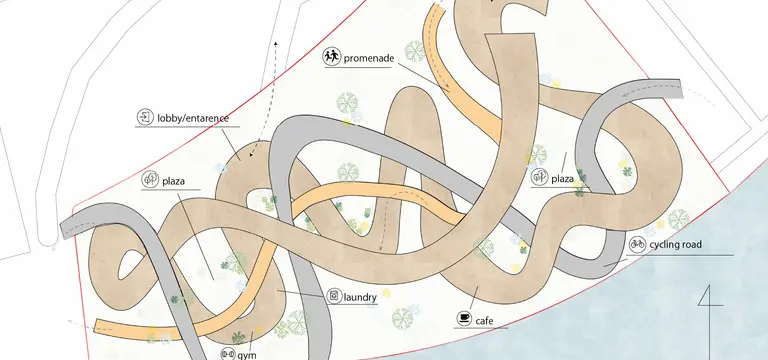
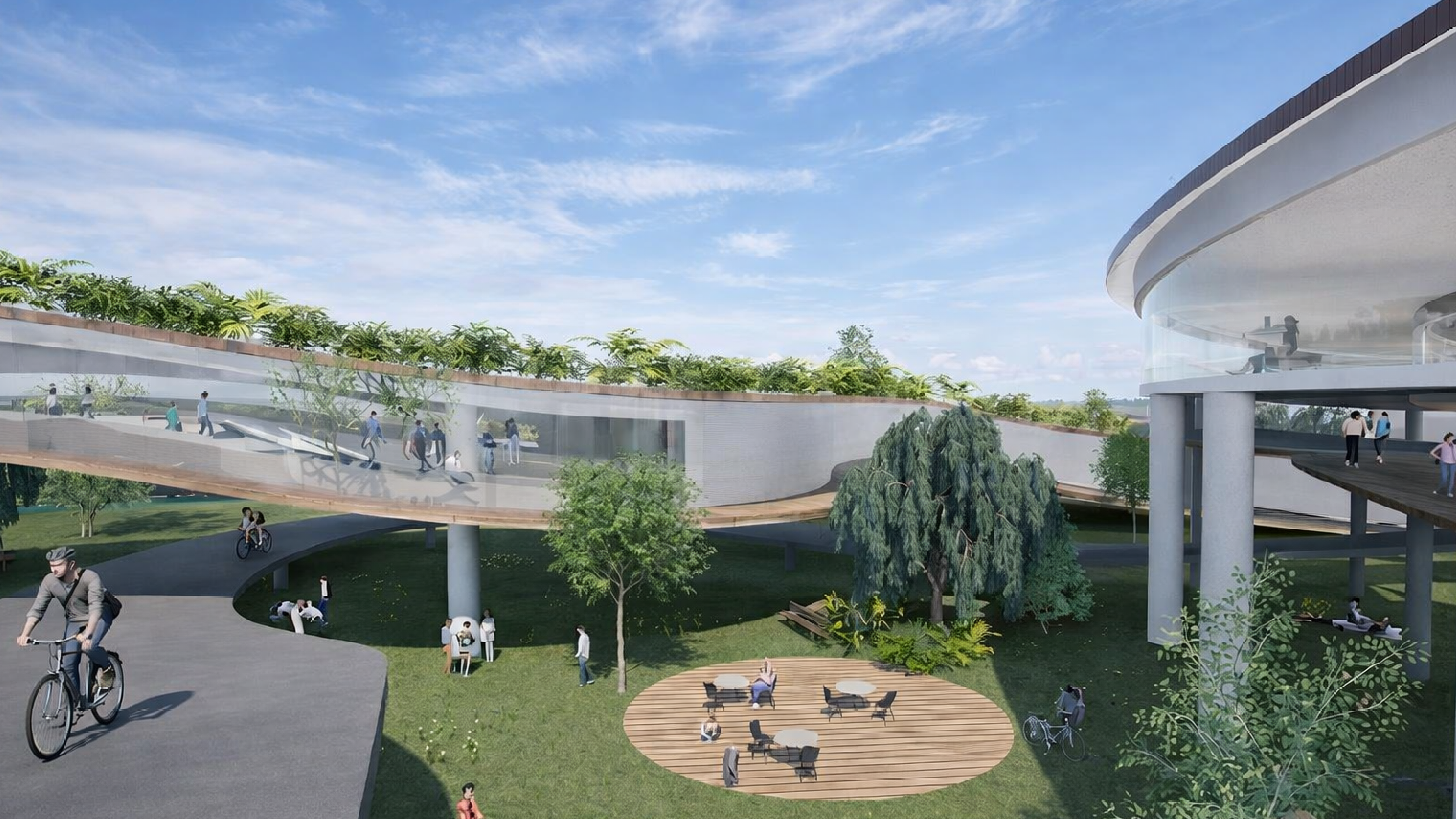
Human and natural domains are currently separated by clear boundaries. This proposal blurs the edges of each domain and creates a condition in which they gradually permeate one another. Through this “blurring,” the project aims not to keep the two in opposition, but to reorganize them into a new relationship in which they overlap and coexist.
工学院大学・建築学部 小川 凌
工学院大学・建築学部 小川 貴大
工学院大学・建築学部 八木橋 雪花
指導教員:工学院大学・建築学部
教授 戸村 英子
講評(南審査員)
旧セメント工場跡地という敷地背景と周辺交通の分断を課題と捉え、人工物と自然を曖昧かつ有機的な形態で接続する本提案は、形態そのものでコンセプトを体現している。流線形と直線形における日射取得と照度を検証し、過度な日射曝露を抑えた室内光環境を成立させることで、快適性の向上とデザインの根拠を両立している。一方で、有機的形態を成立させるための基礎構造の大規模化や特殊形状ガラスの使用は、建設におけるCO2負荷や河川周辺の生態系への影響が懸念される。躯体や内外装において、例えば熱交換パイプを内蔵した鋼管杭、再生ガラス等、建材の利用方法やマテリアルサーキュラリティなどの視点が加わると、形態的価値を超えた提案となる。今後に期待したい。